1.Describe the different phases of the cell cycle with their key events. Explain the significance of the cell cycle in the life of an organism.
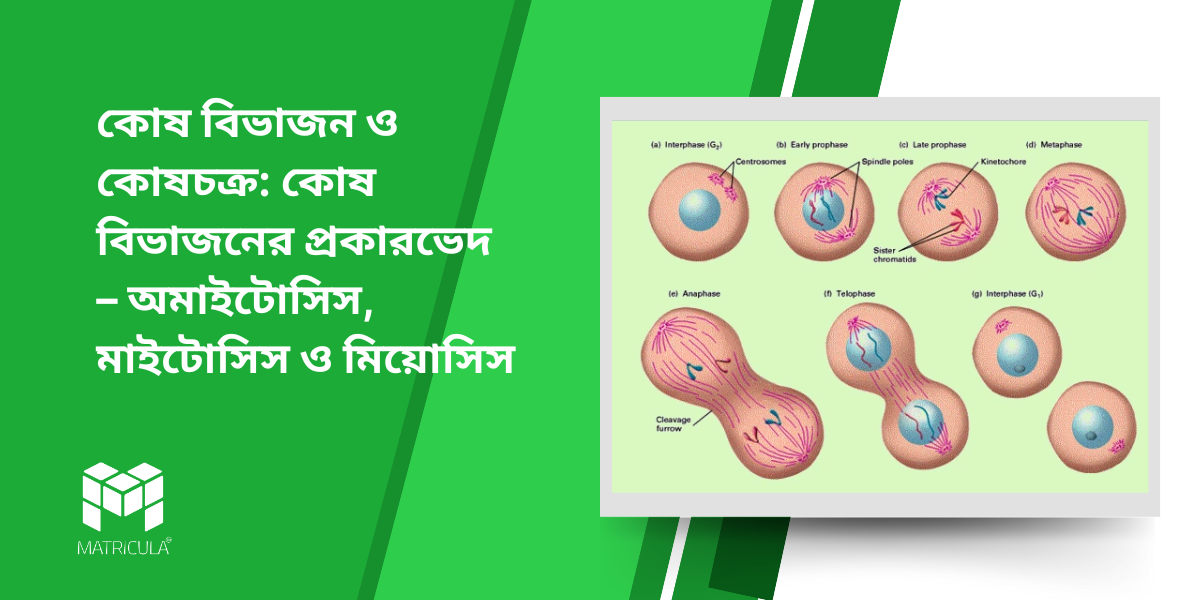
Answer: The cell cycle is an ordered series of events that take place in a cell leading to its division and duplication of its DNA (DNA replication) to produce two daughter cells. It is divided into two main phases: Interphase and M phase (Mitotic phase).
- Interphase: This is the longest phase of the cell cycle, during which the cell grows and prepares for division. It is further divided into three sub-phases:
- G1 phase (Gap 1): The cell grows in size, synthesizes proteins and organelles, and carries out its normal metabolic functions. It also checks for any DNA damage and prepares for DNA replication.
- S phase (Synthesis): This is the crucial phase where DNA replication occurs. Each chromosome is duplicated to form two sister chromatids attached at the centromere. The amount of DNA in the cell doubles.
- G2 phase (Gap 2): The cell continues to grow, synthesizes proteins necessary for cell division (like tubulin for spindle fibers), and further checks for DNA replication errors. It prepares for the M phase.
- M phase (Mitotic phase): This is the phase where the cell actually divides. It consists of two main processes:
- Mitosis: Nuclear division, which is further divided into four stages:
- Prophase: Chromosomes condense and become visible. The nuclear envelope breaks down, and the mitotic spindle begins to form from the centrosomes.
- Metaphase: Chromosomes align at the metaphase plate (equator of the cell) attached to spindle fibers by their centromeres.
- Anaphase: Sister chromatids separate and move to opposite poles of the cell, pulled by the shortening spindle fibers. Each chromatid now becomes an individual chromosome.
- Telophase: Chromosomes reach the poles and begin to decondense. The nuclear envelope reforms around each set of chromosomes, and the spindle fibers disappear.
- Cytokinesis: The cytoplasm divides, resulting in two genetically identical daughter cells. In animal cells, this occurs through the formation of a cleavage furrow, while in plant cells, a cell plate forms and grows to divide the cytoplasm.
Significance of the Cell Cycle:
- Growth: In multicellular organisms, the cell cycle, specifically mitosis, is essential for growth by increasing the number of cells.
- Repair and Regeneration: Mitosis plays a vital role in repairing damaged tissues and replacing worn-out cells. In some organisms, it is also involved in regeneration of lost body parts.
- Asexual Reproduction: In unicellular organisms and some multicellular organisms, mitosis is the basis of asexual reproduction, producing genetically identical offspring.
- Maintaining Chromosome Number: Mitosis ensures that each daughter cell receives the same number and type of chromosomes as the parent cell, maintaining genetic stability within the organism.
- Development: The precisely regulated cell cycle is crucial for the proper development of a multicellular organism from a single fertilized egg (zygote), involving both cell division and differentiation.
2.Describe the process of sexual reproduction in flowering plants, starting from pollination to the formation of fruit and seed. Highlight the significance of sexual reproduction.
Answer: Sexual reproduction in flowering plants involves the fusion of male and female gametes, leading to the formation of genetically diverse offspring. The process can be broadly divided into the following stages:
- Pollination: The transfer of pollen grains containing the male gametes from the anther of a stamen to the stigma of a pistil (carpel). Pollination can be self-pollination (pollen from the same flower or another flower of the same plant) or cross-pollination (pollen from a flower of a different plant of the same species). Various agents like wind, water, insects, birds, and animals facilitate pollination.
- Fertilization (Double Fertilization): Once the pollen grain lands on a compatible stigma, it germinates to form a pollen tube that grows down through the style towards the ovule in the ovary. The pollen tube carries two male gametes. Upon reaching the ovule, the pollen tube releases the two male gametes into the embryo sac:
- One male gamete fuses with the egg cell (female gamete) to form a diploid zygote (2n). This fusion results in the embryo, which will develop into the future seedling.
- The other male gamete fuses with the central cell, which already contains two haploid polar nuclei. This fusion results in a triploid (3n) primary endosperm nucleus. The primary endosperm nucleus divides repeatedly to form the endosperm, a nutritive tissue that provides nourishment to the developing embryo. This unique fusion of two male gametes with different female structures is called double fertilization, a characteristic feature of angiosperms.
- Development of Embryo and Endosperm: The zygote undergoes a series of mitotic divisions and cell differentiation to develop into a mature embryo. The embryo consists of a radicle (future root), plumule (future shoot), and cotyledons (seed leaves). Simultaneously, the primary endosperm nucleus develops into the endosperm, which stores food reserves (e.g., starch, proteins, fats) for the developing embryo.
- Formation of Seed: After fertilization, the ovule develops into a seed. The integuments (protective layers of the ovule) harden to form the seed coat (testa). The embryo lies dormant within the seed, along with the stored food in the endosperm (or cotyledons in some seeds).
- Formation of Fruit: The ovary, after fertilization, develops into a fruit. The other floral parts (sepals, petals, stamens, style, stigma) usually wither and fall off, although in some cases, they may persist. The fruit protects the developing seeds and aids in their dispersal. The fruit wall (pericarp) develops from the ovary wall and can be fleshy (e.g., mango, apple) or dry (e.g., pea, groundnut).
Significance of Sexual Reproduction:
- Genetic Variation: Sexual reproduction introduces genetic variation in the offspring due to the combination of genetic material from two parents and the process of meiosis (which involves crossing over and independent assortment). This variation is crucial for adaptation to changing environmental conditions and evolution.
- Enhanced Adaptability: Genetically diverse offspring have a higher chance of survival in diverse environments or when facing new diseases or challenges.
- Evolutionary Advantage: The genetic variation produced by sexual reproduction provides the raw material for natural selection, driving the process of evolution and the development of more complex and better-adapted organisms over time.
Seed and Fruit Formation: Sexual reproduction leads to the formation of seeds, which are important for the dispersal and propagation of plants. Fruits aid in seed dispersal by attracting animals or by other mechanisms.