
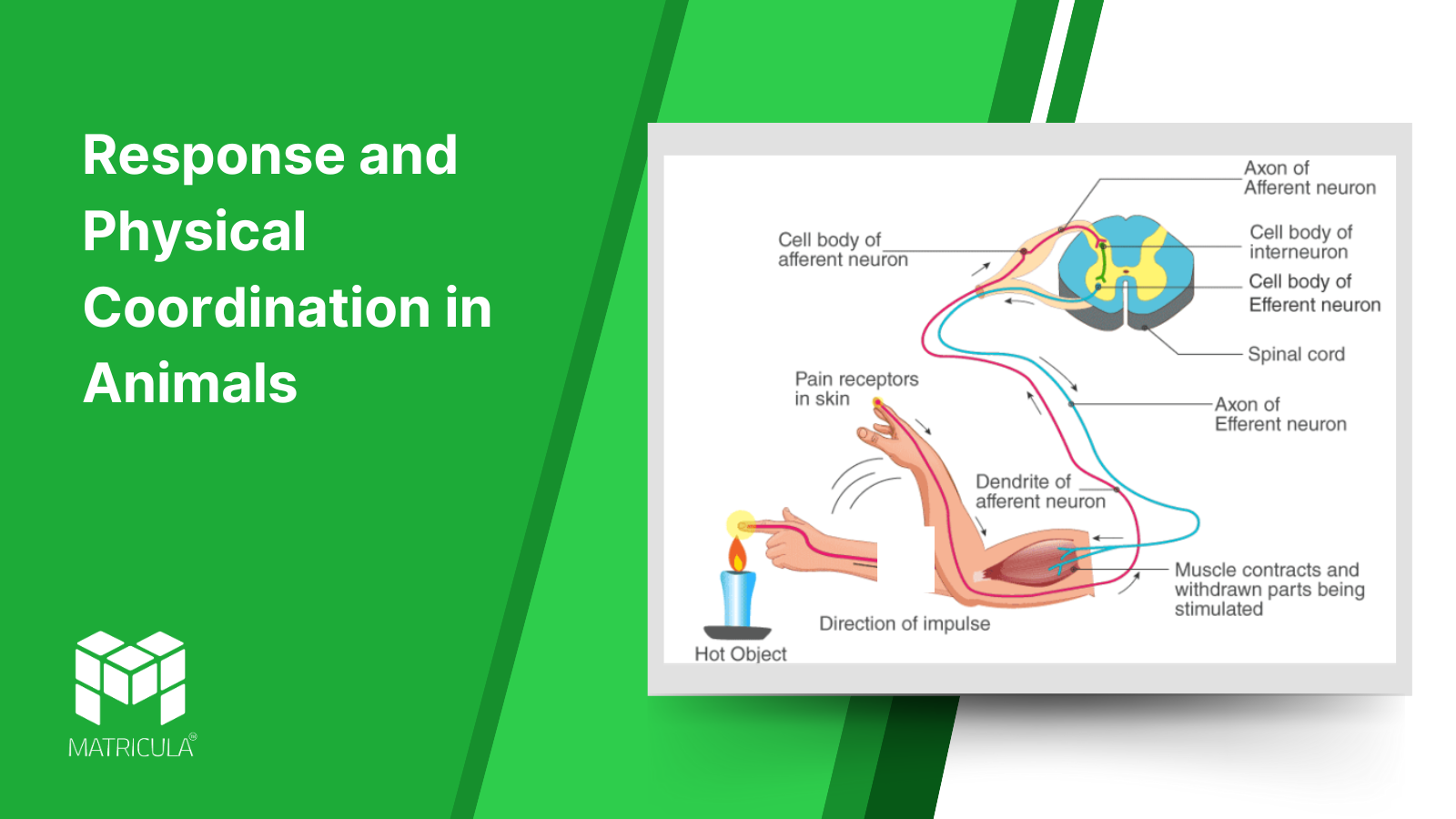
Response and Physical Coordination in Animals
The ability of animals to respond to stimuli and maintain coordination is essential for their survival. This process is governed by the nervous system, which facilitates communication between different parts of the body. Below are key components that play vital roles in this mechanism:
Types of Nerves
Nerves are specialized structures that transmit signals between the brain, spinal cord, and various parts of the body. There are three main types of nerves:
- Afferent Nerves (Sensory Nerves)
- These nerves carry sensory information from the sensory organs (like eyes, ears, and skin) to the central nervous system (CNS).
- Example: The optic nerve transmits visual signals to the brain.
- Efferent Nerves (Motor Nerves)
- These nerves transmit signals from the CNS to muscles and glands to initiate movement or secretion.
- Example: Nerves that stimulate hand muscles to move.
- Mixed Nerves
- These nerves perform both sensory and motor functions, carrying signals to and from the CNS.
- Example: The spinal nerves, which contain both afferent and efferent fibers.
Nerve Ganglion and Synapse
Understanding nerve ganglia and synapses is crucial to comprehending the transmission of nerve impulses.
- Nerve Ganglion
- A nerve ganglion is a cluster of nerve cell bodies located outside the CNS. It functions as a relay point, where signals are processed before continuing their path.
- Example: Dorsal root ganglia in the spinal cord transmit sensory information to the brain.
- Synapse
- A synapse is a small gap between two nerve cells, where neurotransmitters carry signals from one neuron to another.
- Synapses ensure that electrical signals are efficiently transmitted while also regulating the speed and direction of the impulses.
Types of Nervous Systems
The nervous system in animals is categorized into three primary types:
- Central Nervous System (CNS)
- Composed of the brain and spinal cord, the CNS is the main control center responsible for processing information and initiating responses.
- Peripheral Nervous System (PNS)
- The PNS connects the CNS to the rest of the body through a network of nerves, transmitting sensory and motor signals.
- Autonomic Nervous System (ANS)
- The ANS controls involuntary actions such as heartbeat, digestion, and respiration. It has two subdivisions:
- Sympathetic Nervous System: Activates the body’s “fight or flight” response.
- Parasympathetic Nervous System: Promotes the “rest and digest” state, calming the body after stress.
- The ANS controls involuntary actions such as heartbeat, digestion, and respiration. It has two subdivisions:
Conclusion
The coordination and response mechanism in animals rely heavily on the efficient functioning of nerves, ganglia, and synapses. By understanding the roles of afferent, efferent, and mixed nerves, along with the importance of the CNS, PNS, and ANS, students can develop a clearer insight into the biological processes that maintain bodily coordination and response in animals.