
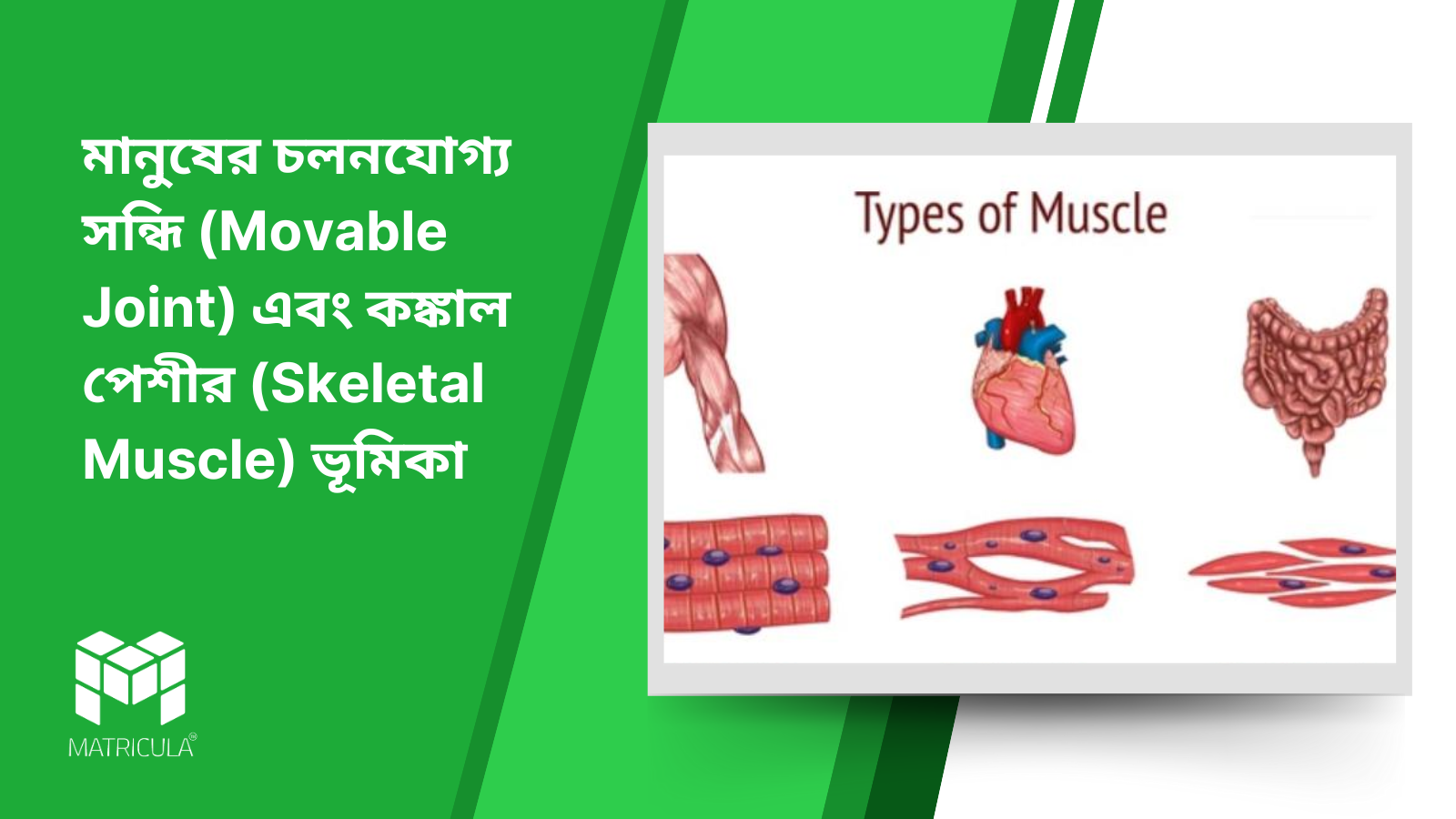
Locomotion as a Type of Response in Animals: Role of Movable Joints and Skeletal Muscles in Humans
Introduction
Locomotion is a crucial function in animals that allows movement from one place to another in response to stimuli. In humans, locomotion is facilitated by the coordinated action of the skeletal system and muscular system. The interaction between movable joints and skeletal muscles enables smooth, controlled movement, essential for daily activities. This article explores the role of movable joints and skeletal muscles in human locomotion, highlighting their structure, types, and functions.
Movable Joints and Synovial Joints
Joints are the points where two or more bones meet, allowing movement. Based on their mobility, joints are classified into three types: immovable joints (fibrous joints), partially movable joints (cartilaginous joints), and movable joints (synovial joints). Among these, movable joints play a crucial role in locomotion.
Synovial Joints: The Key to Movement
Synovial joints are the most common type of movable joints in the human body. These joints have a synovial cavity filled with synovial fluid, which reduces friction and ensures smooth movement. The ends of bones in a synovial joint are covered with cartilage, providing cushioning and preventing wear and tear.
Types of Movable (Synovial) Joints
- Hinge Joint
- Allows movement in one direction, like the opening and closing of a door.
- Examples: Knee joint, elbow joint, ankle joint.
- Function: Enables flexion and extension, which are essential for walking and running.
- Ball and Socket Joint
- Allows movement in multiple directions, including rotation.
- Examples: Shoulder joint, hip joint.
- Function: Supports flexion, extension, abduction, adduction, and rotation, allowing free movement of limbs.
Skeletal Muscles and Their Role in Locomotion
Skeletal muscles are voluntary muscles attached to bones via tendons. They work in antagonistic pairs, meaning one muscle contracts while the other relaxes to produce movement. These muscles play a vital role in executing various types of movements, including walking, running, and lifting objects.
Types of Skeletal Muscle Movements
- Flexion
- Decreasing the angle between two bones.
- Example: Bending the elbow (Biceps contract, Triceps relax).
- Extension
- Increasing the angle between two bones.
- Example: Straightening the knee (Quadriceps contract, Hamstrings relax).
- Abduction
- Moving a limb away from the midline of the body.
- Example: Raising the arm sideways.
- Adduction
- Moving a limb towards the midline of the body.
- Example: Bringing the arms back to the body.
- Rotation
- Movement of a bone around its longitudinal axis.
- Example: Turning the head from side to side.
Human locomotion is a coordinated effort between movable joints and skeletal muscles. Synovial joints, including hinge joints and ball and socket joints, provide flexibility and range of motion. Meanwhile, skeletal muscles perform various types of movements, such as flexion, extension, abduction, adduction, and rotation, to execute different physical actions. Understanding the role of these components helps in appreciating how our body functions efficiently in response to environmental stimuli.
This knowledge is not only essential for biology studies but also for understanding medical conditions related to movement disorders, injuries, and rehabilitation.